FameEX Today’s Crypto News Recap | June 4, 2026
2026-06-04 11:43:11

US House probes prediction markets, Maelstrom highlights Worldcoin, and BTC faces massive liquidations, falling below $63,000 amid extreme market fear. Recent macro and geopolitical developments have shown early signs of potential easing. Reports indicate that Israel and Lebanon have reached a ceasefire agreement. However, this improvement in geopolitical expectations has not yet turned into effective support for the crypto market. The broader market remains under clear downside volatility. Bitcoin quickly fell below the key $63,000 support level during the day and consolidated near $62,994.7, with a 24-hour decline of 5.73%. Ethereum and the broader major crypto market also came under heavy selling pressure. Market sentiment indicators remained in the extreme fear zone. Trading data shows that total liquidations across the market reached USD 1.662 billion over the past 24 hours. Long positions suffered a severe liquidation wave, with long liquidations reaching USD 1.419 billion. Short liquidations stood at USD 244 million. This clearly reflects the fragility of leveraged markets during periods of rising volatility and liquidity imbalance. Long liquidations in Bitcoin and Ethereum were especially large. Bitcoin’s current 8-hour average funding rate across the market remains negative at -0.0014%. This shows that the futures market is highly cautious toward short-term price movements. Funding rate fluctuations on major CEX platforms also reflect intense positioning battles between long and short traders near key technical levels. Investors are closely watching whether Bitcoin can build a stable base in the $60,000 to $62,000 range. They also remain highly alert to the potential impact of macro events on the broader asset price structure as market liquidity tightens.
Key News Highlights:
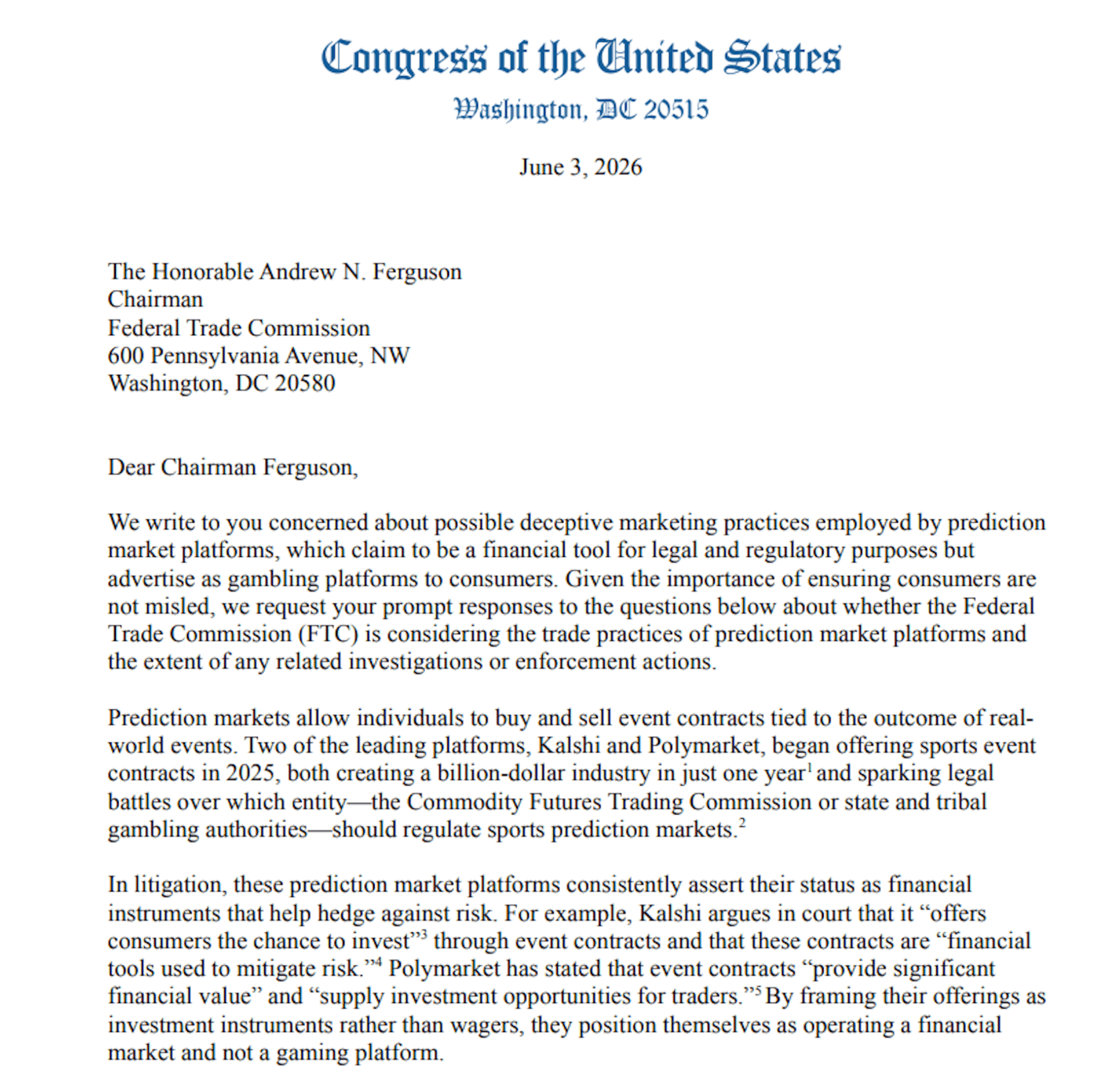
US House Lawmakers Call for FTC Probe Into Potentially Deceptive Marketing by Prediction Market Platforms
Nine Democratic lawmakers in the US House of Representatives recently sent a formal letter to the Federal Trade Commission. They called for an in-depth investigation into the marketing strategies and regulatory compliance of online prediction market platforms. The lawmakers accused these platforms of presenting materially different narratives to the public and to regulators. In their statement, they said some prediction platforms often use language that closely resembles sports betting when marketing to consumers. Yet when speaking to government regulators, these platforms describe themselves as investment tools that provide financial products. This clear information gap and double standard have raised strong concerns in Congress over consumer rights and market fairness. In May, Congress had already launched a dedicated inquiry into several major market platforms. The investigation focused on potential gaps in their internal trading controls and compliance with relevant financial rules. Lawmakers also asked the FTC to provide detailed information by the end of June. This information would help clarify whether enforcement action should be taken against such platforms. As prediction markets gradually become a real use case within the blockchain industry, contract trading tied to elections and geopolitical events has repeatedly reached new highs. The legal positioning battle between market participants and regulators is becoming more intense. Future regulatory decisions will not only shape the business models of these platforms. They may also have a deep structural impact on the legal framework of the broader decentralized prediction market sector.
Maelstrom Says Worldcoin’s Native Token WLD Could Be a Key Proxy for the AI Boom
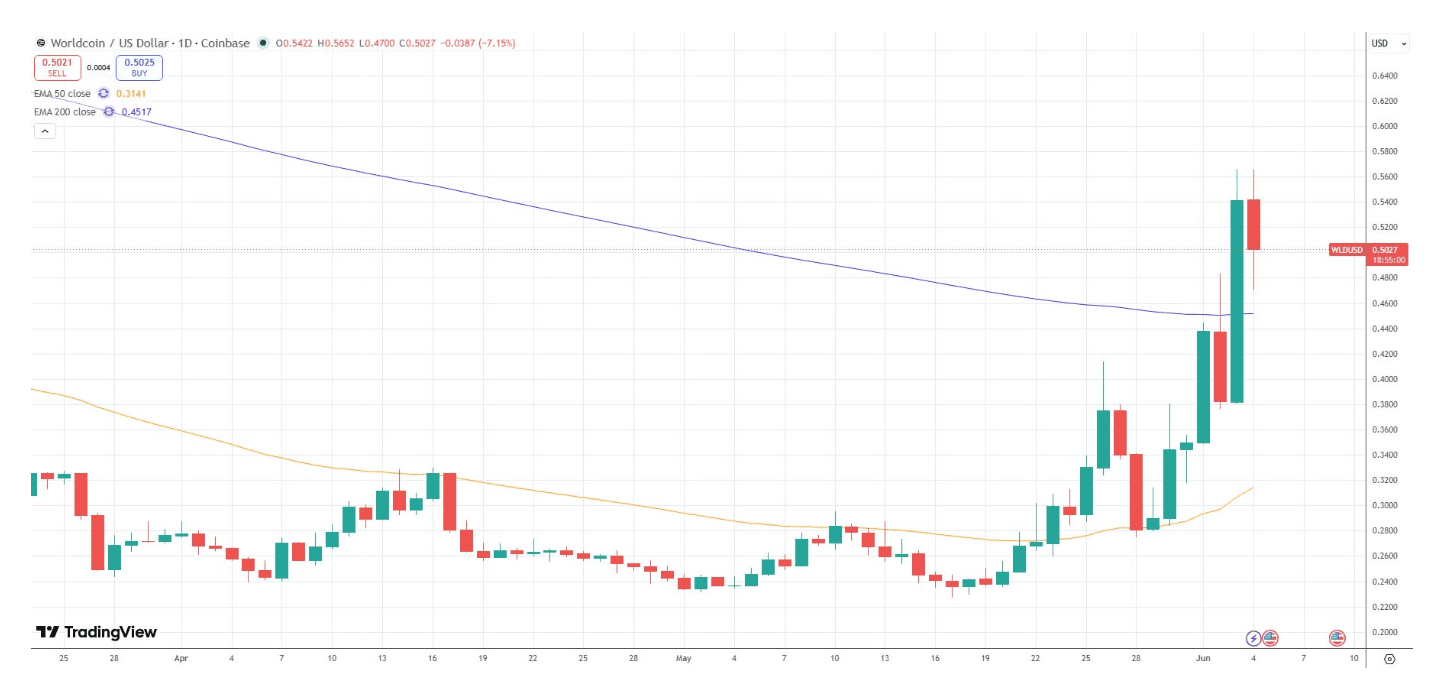
A recent industry report from investment firm Maelstrom framed Worldcoin’s native token WLD as a key proxy asset for capturing the current AI industry boom. The firm also predicted that the token could rise sharply to a target level of $5 over the next few months. Analyst Lukas Ruppert emphasized that as several leading AI companies prepare for public listings, market capital is actively seeking exposure to related themes. In his view, WLD’s current unlocked market capitalization remains relatively low within the broader AI valuation framework. This may give the market an investment opportunity with asymmetric upside potential. Although WLD has been in a downtrend since February, the report highlighted two possible catalysts. One is that entities holding large amounts of WLD may use their cash reserves to increase their positions. The other is the adjustment to the token unlock release ratio expected in July. Both factors could significantly ease long-term selling pressure in the market. WLD remains highly volatile and its price movement is not linear. Still, it has shown strong relative strength over the past week. This view reflects how some crypto market participants are trying to connect blockchain projects with the broader AI industry trend. Market participants will continue to monitor the speed of token unlocks and follow-up buying liquidity. These factors will help determine whether WLD can achieve a valuation recovery in the future market environment.
Bitcoin’s Drop Toward $60,000 Triggers Large-Scale Liquidations and Liquidity Structure Adjustment
Bitcoin recently pulled back and briefly approached the $60,000 area before staging a technical rebound. Even so, the sharp move forced more than USD 600 million in long positions to be liquidated. This clearly reflects the heavy liquidity pressure and structural risk faced by overleveraged market sentiment during a downside move. Some market participants tried to interpret the rebound as a sign of short-term support confirmation. They also expected the price to attempt a retest of the $70,000 range. However, the bearish flag structure on the technical side has not been fully invalidated. This has kept the market highly cautious toward the future trend. Data shows that selling near key technical levels triggered a large chain reaction in the futures market. This not only reveals the fragility of market participants in a volatile environment. It also shows that asset price volatility can easily be amplified when strong buying momentum is absent. The market is now closely watching whether Bitcoin can hold above an important long-term moving average support level. This area has played a key bottom-support role in several historical market cycles. If the price fails to hold this level for an extended period, the market may further confirm a downward correction trend. It could also intensify the liquidity contraction effect across the broader asset class.
Russian Ruble-Backed Stablecoin A7A5 Expands Onchain Transaction Scale Under Geopolitical Sanctions
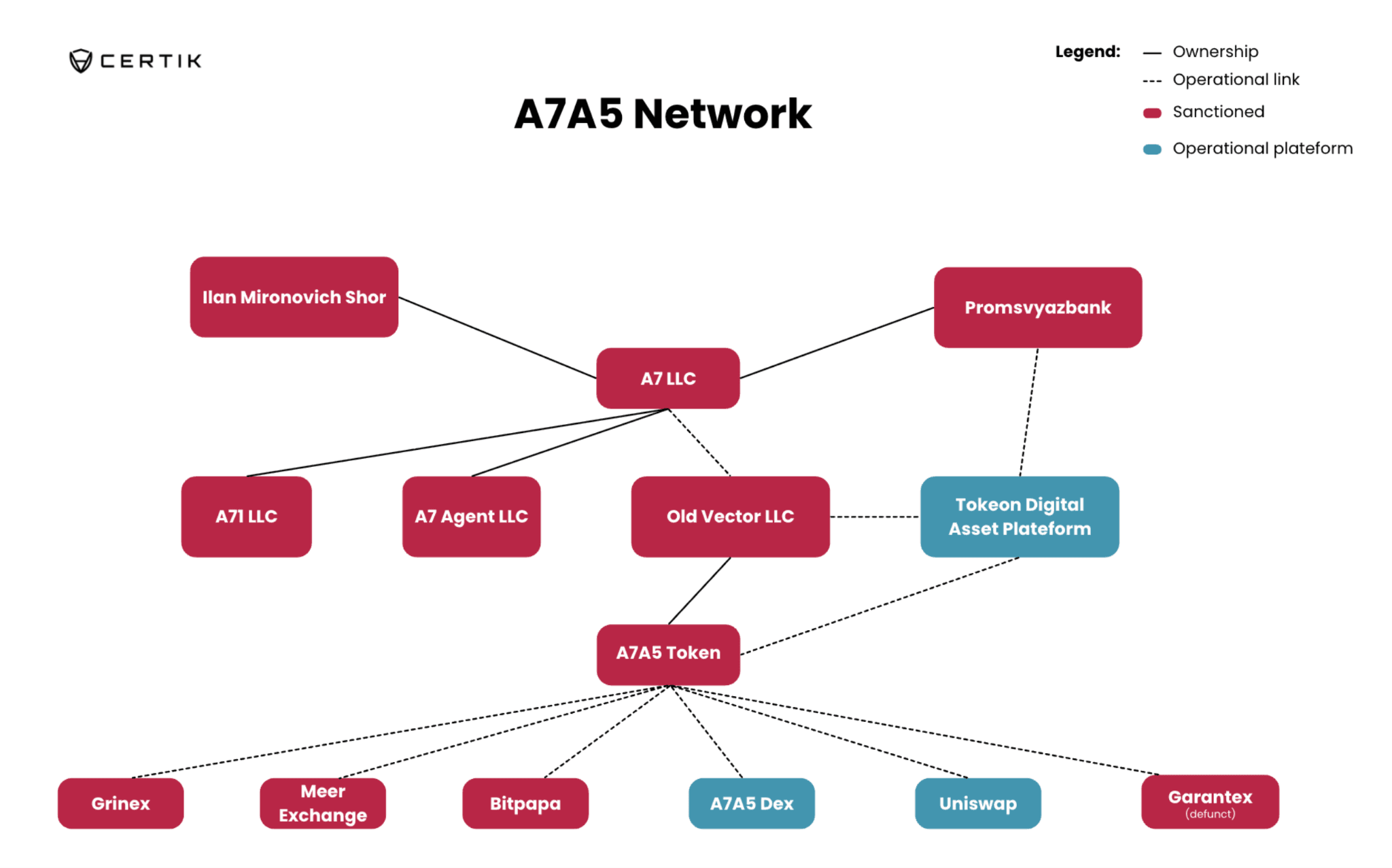
A recent investigation report from blockchain security firm CertiK stated that the Russian ruble-backed stablecoin A7A5 has continued to expand significantly despite strict financial sanctions from Western countries. Its cumulative onchain transaction volume has surpassed USD 110 billion. Data shows that the stablecoin holds about 43% of the global non-USD stablecoin market. The number of wallets holding the asset has also risen sharply over the past year or more. This highlights its alternative utility in cross-border settlement demand, especially in scenarios that seek to bypass limits within the traditional financial system. CertiK’s analysis noted that the project’s architecture is designed to keep its asset reserves and settlement mechanism outside the direct jurisdiction of Western financial infrastructure. This helps it avoid and bypass multiple financial sanctions and blocking measures. Although relevant regulators have introduced a series of measures to prohibit transactions involving the asset, enforcement remains difficult. Its issuance and reserve management mechanisms are mainly distributed across Central Asian banking networks and within Russia. This has created major obstacles for external sanctions at the implementation level. The case reflects a growing trend in which blockchain technology is being used to build alternative payment networks outside the traditional international payment system amid rising geopolitical conflict. This not only challenges conventional monitoring of fund flows. It also creates a highly complex and long-term challenge for global financial regulation and compliance frameworks.
Disclaimer: The information provided in this section is for informational purposes only and doesn't represent any investment advice or FameEX's official view.