FameEX Today’s Crypto News Recap | June 9, 2026
2026-06-09 06:49:45

UK FCA eyes retail crypto funds, RWA tokens surged 589%, and BTC accumulation strengthens. Crypto markets now face macro volatility and critical support tests. Global financial markets remain under a highly uncertain macro environment. The probability that the Fed will keep interest rates unchanged in June has climbed to 98.1%, showing that expectations for a dovish policy shift have weakened sharply. This has tightened global liquidity and added further pressure on risk assets. At the same time, sharp moves in the Japanese yen and ongoing geopolitical tensions have pushed global markets toward a stronger risk-off stance. The Crypto Fear and Greed Index has dropped to 10, placing the market in the Extreme Fear zone. Under this structural pressure, Bitcoin and Ethereum are trading with elevated volatility. Data shows that if Bitcoin breaks above $65,914, major CEXs could face USD 1.365 billion in cumulative short liquidation pressure. If Bitcoin falls below $59,908, USD 1.122 billion in long positions could face forced liquidation. For Ethereum, a break below $1,585 could trigger USD 752 million in long liquidation pressure. This points to a highly fragile leverage structure across the market. In spot ETF flows, Bitcoin spot ETFs recorded USD 91.37 million in net outflows yesterday, while BlackRock’s IBIT posted a single-day outflow of USD 233 million. This reflects a more defensive institutional stance under macro uncertainty. Ethereum spot ETFs, however, showed relative resilience with USD 82.37 million in net inflows. This suggests that allocation strategies still differ across major crypto assets, even as short-term sentiment remains weak. Overall, the market is now facing a critical support test under the combined pressure of tighter macro expectations and internal liquidity imbalance.
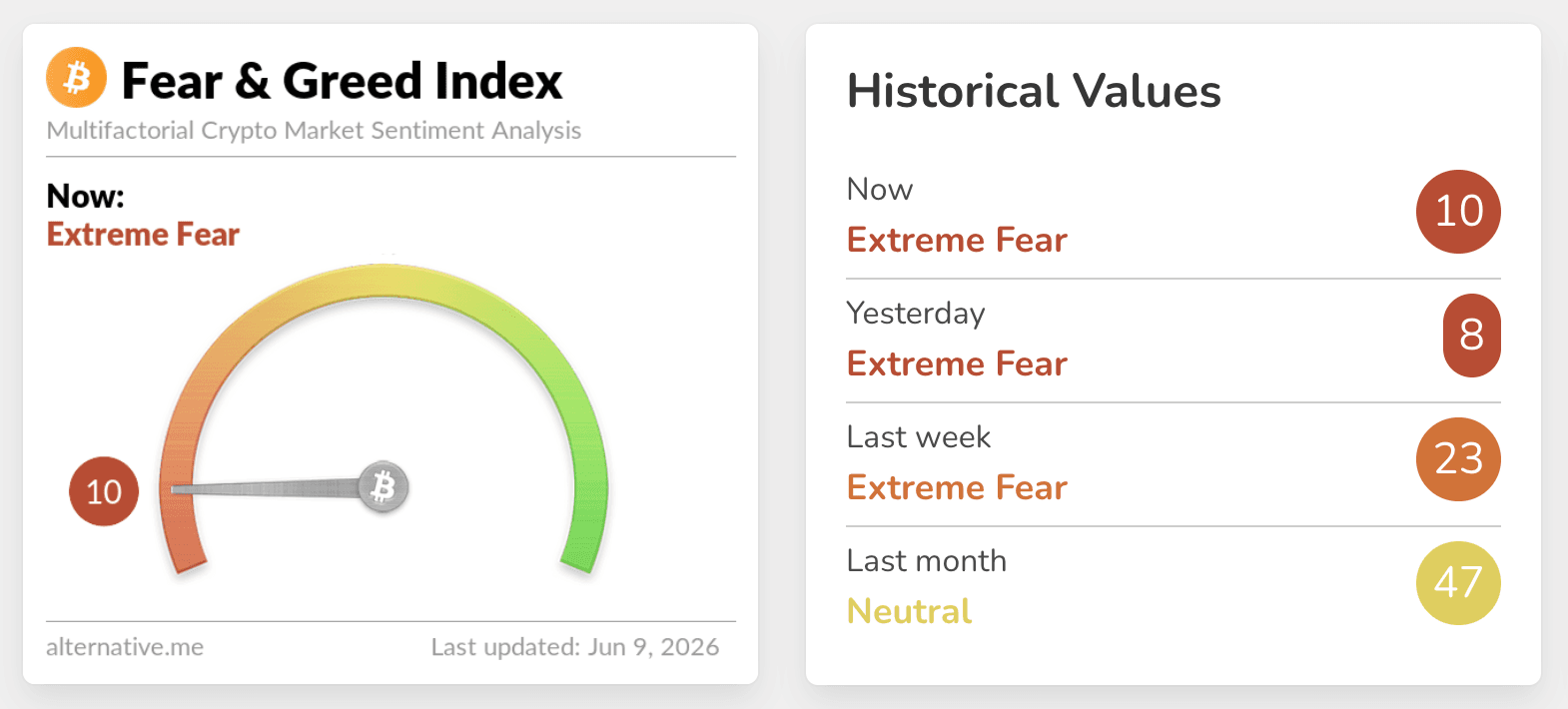
Source: Alternative
Key News Highlights:
UK FCA Proposes Opening Crypto Asset Allocation To Retail Funds
The UK Financial Conduct Authority recently published a consultation paper proposing that regulated funds aimed at retail investors be allowed to allocate up to 10% of their net asset value to crypto-related investment products under strict rules. This policy shift is designed to narrow the regulatory gap between retail investors and professional institutions in access to crypto asset allocation. If the proposal is implemented, eligible retail funds would be allowed to hold crypto exchange-traded notes. This could improve transparency within a regulated market structure. The FCA stressed that the core goal is to ensure regulated fund products remain aligned with modern portfolio needs while still protecting investors. The proposal would also require mandatory review processes to help keep market functions stable and consumer protections in place. It does not represent a full market opening. Instead, it sets a conservative 10% cap on allocation and requires fund managers to disclose investment objectives and risk profiles clearly. These disclosures must remain consistent with each fund’s overall investment strategy. The FCA also clarified that the rule would not apply to unregulated schemes or qualified investor schemes that cannot be marketed to retail investors. Those vehicles may still hold higher allocations under their existing structures. The public consultation will run for five weeks and end on July 13. The proposal reflects the UK’s broader work on stablecoin regulation, custody rules, and staking frameworks as it seeks to build a more consistent and compliant path for the crypto industry.
Tokenized RWA Market Shows Strong Growth
Despite a challenging macro environment and increased volatility across the global crypto market, tokenized real-world assets have shown resilience and strong growth momentum. According to a recent industry research report, the active tokenized RWA market expanded by 589% from early 2025 to June 2026. This figure highlights the accelerating migration of global capital toward blockchain-based financial infrastructure. Bonds and money market funds continue to lead the sector by asset size. This category grew by 83% and added about USD 6.5 billion in asset value to the broader ecosystem. Tokenized stocks became the fastest-growing segment, with market value rising by 422%. This growth was driven mainly by the rapid expansion of related platforms and stronger market adoption. Tokenized gold and other precious metals also attracted an additional USD 1.5 billion in inflows during the period. This shows that investors continued to seek assets with defensive characteristics even as the broader crypto market weakened. The structural growth of this sector shows that the tokenization narrative has moved beyond its early focus on Treasurys. It is now entering a more mature stage as a diversified yield ecosystem. As major traditional financial institutions use digital asset platforms to provide professional fund services, institutional demand for blockchain-based settlement and asset management technology continues to rise. This is modernizing underlying payment networks and reshaping the asset management industry. It is also creating a financial ecosystem that both competes with and complements the stablecoin market.
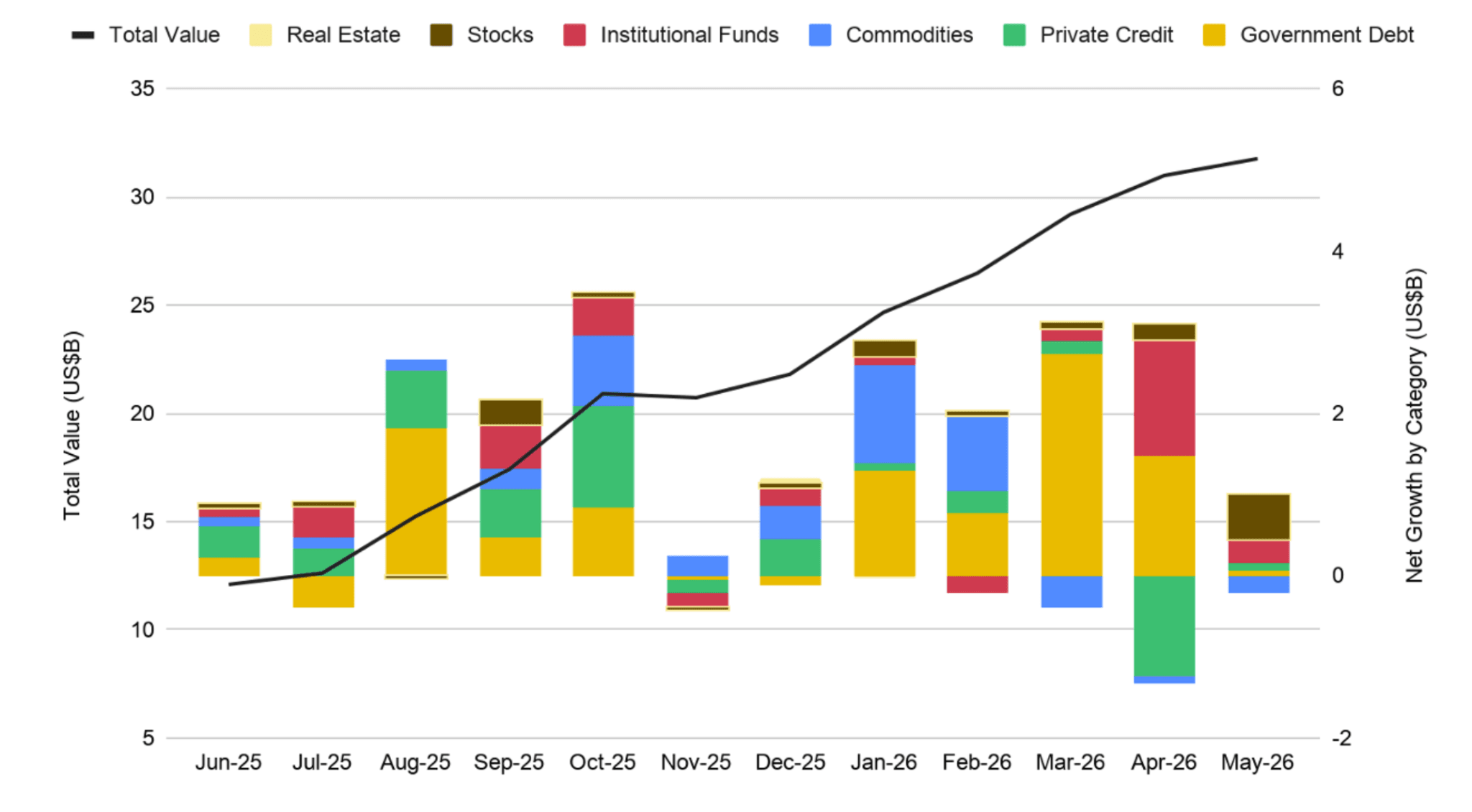
The Tokenized RWA Market Is Becoming Increasingly Diversified
Bitcoin On Chain Accumulation Signals Strengthen
Bitcoin is showing clear long-term accumulation signals, even as the market faces a severe price correction and continued downside risk. On-chain data shows that several key investor cohorts are actively accumulating BTC during the pullback. This indicates that bottom-area demand is strengthening across parts of the market. Analysts have noted that Bitcoin’s daily and two-week relative strength index readings have dropped to historically low levels. In past market cycles, such readings were often viewed as potential long-term accumulation windows. Related data also shows strong buying interest from retail holders and mid-sized investor groups that hold smaller amounts of Bitcoin. One key point is the activity among whale addresses holding 1,000 to 10,000 BTC. These wallets added more than 53,042 BTC over the past 60 days. This suggests that large holders in this cohort have continued to position for the medium and long term. Their buying activity has helped absorb part of the market’s selling pressure and support the lower end of the price structure. However, analysts have also raised risk warnings. Although accumulation momentum appears strong, the market still faces high short-term uncertainty. Some long-term valuation indicators, such as CVDD, are currently near 0.73. Historical data shows that this metric has often moved closer to 1.0 near major cycle bottoms. This means that if macro conditions trigger a deeper correction, Bitcoin may seek firmer support in the $44,600 to $56,800 range. Technical analysis also shows an unfilled price imbalance zone on the quarterly chart. Investors should carefully assess how macroeconomic indicators may interfere with the current accumulation trend.
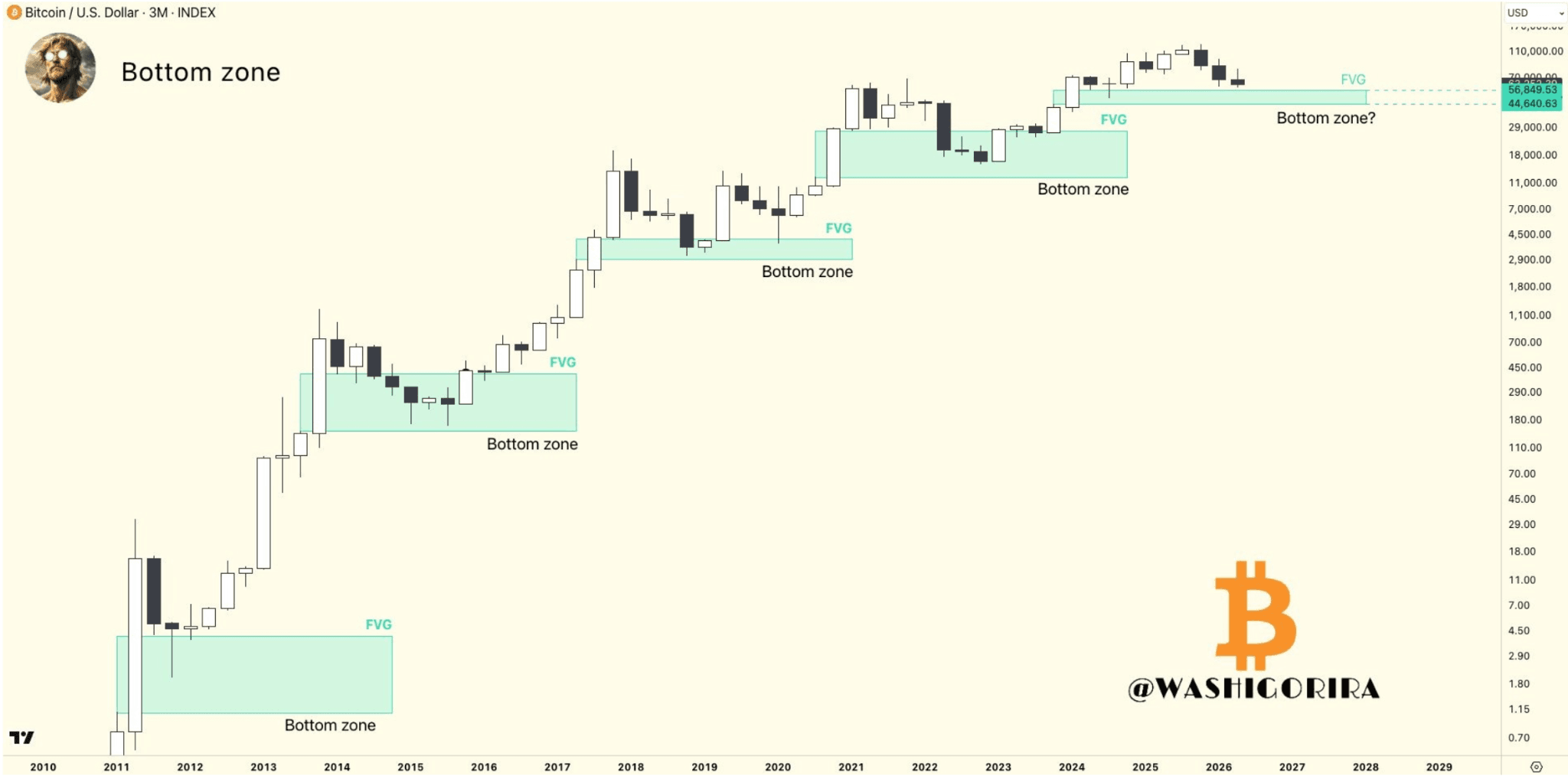
Titan Of Crypto Analyzes Bitcoin Quarterly Price And FVG
Macro Headwinds Persist As Bitcoin Tests The Key $60,000 Support Level
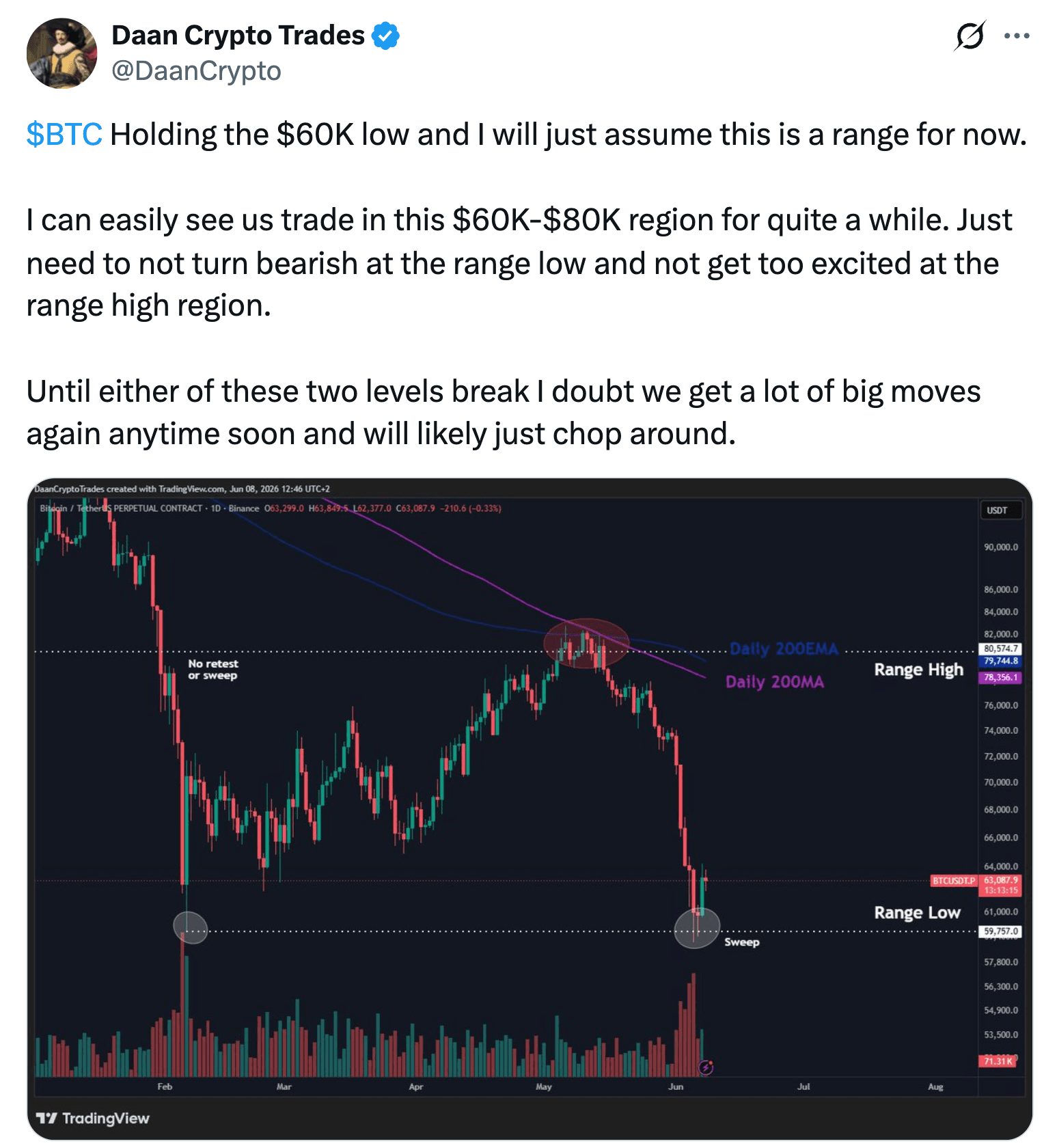
Bitcoin remains under pressure from multiple macro headwinds, with price action hovering near a key support area ahead of the Monday market open. Market sentiment remains fragile and lacks a clear directional anchor. Although the psychological and technical support level at $60,000 has held for now, the market still lacks strong upside momentum to support a broader rebound. Analysts believe the current market is caught between range-bound consolidation and the risk of a deeper breakdown. Market observers noted that Bitcoin is attempting to build a price path that is more independent from traditional financial markets. However, if it fails to show enough resilience during the pullback in AI-related US equities, sentiment could quickly shift back toward a more bearish stance. In its latest market commentary, a professional trading institution noted that Bitcoin is facing pressure from energy prices, interest rate expectations, foreign exchange volatility, and geopolitical risk. This macro backdrop is not ideal for high-beta assets. In the short term, Bitcoin may still attempt to consolidate within a broad $60,000 to $80,000 range. However, if it cannot break away from its correlation with traditional risk assets, or if it fails to stage a technical rebound from current support, it may face deeper correction pressure. Traders should closely watch the strength of the $60,000 defense. They should also monitor how the market prices further macro developments and possible chain reactions over the coming months.
Disclaimer: The information provided in this section is for informational purposes only and doesn't represent any investment advice or FameEX's official view.