FameEX Today’s Crypto News Recap | June 11, 2026
2026-06-11 06:49:57

The CFTC proposes a prediction market framework, miners pivot to AI amid record-low profits, and UK groups challenge bank bans. Meanwhile, BTC consolidates near $66K amid macro headwinds and ETF outflows. Bitcoin has recently consolidated around $66K as broader macro sentiment turns more cautious and risk assets remain under pressure. U.S. equities closed weaker on Wednesday, with the Nasdaq down nearly 2%. Super Micro Computer (SMCI) plunged 28%, while Tesla and Nvidia both fell more than 3%. The S&P 500 technology sector has now pulled back 11% from its record high. Against this backdrop, CME FedWatch data shows a 98.4% probability that the Federal Reserve will keep rates unchanged in June. The market is closely watching the Fed’s policy path. SpaceX’s upcoming IPO is also being viewed as a potential source of short-term pressure. Some market participants are concerned that retail investors may sell crypto assets to raise funds for IPO subscriptions. Onchain analysis shows that Bitcoin’s key Investor Price indicator currently stands at $48.3K. This level is viewed as a strong long-term accumulation support area. Ethereum’s Delta Price is near $700, which reflects its structural cost baseline. According to SoSoValue, spot Bitcoin ETFs recorded USD 214 million in net outflows yesterday, marking the fourth consecutive day of outflows. Spot Ethereum ETFs saw USD 35.59 million in net outflows over the same period. Coinglass data shows that if Bitcoin falls below $59.5K, cumulative long liquidation intensity on major CEXs could reach USD 1.486 billion. If Ethereum falls below $1,572, cumulative long liquidation intensity could reach USD 659 million. The current Crypto Fear & Greed Index stands at 12, placing the market in the “Extreme Fear” zone. Total crypto liquidations over the past 24 hours reached USD 324 million.
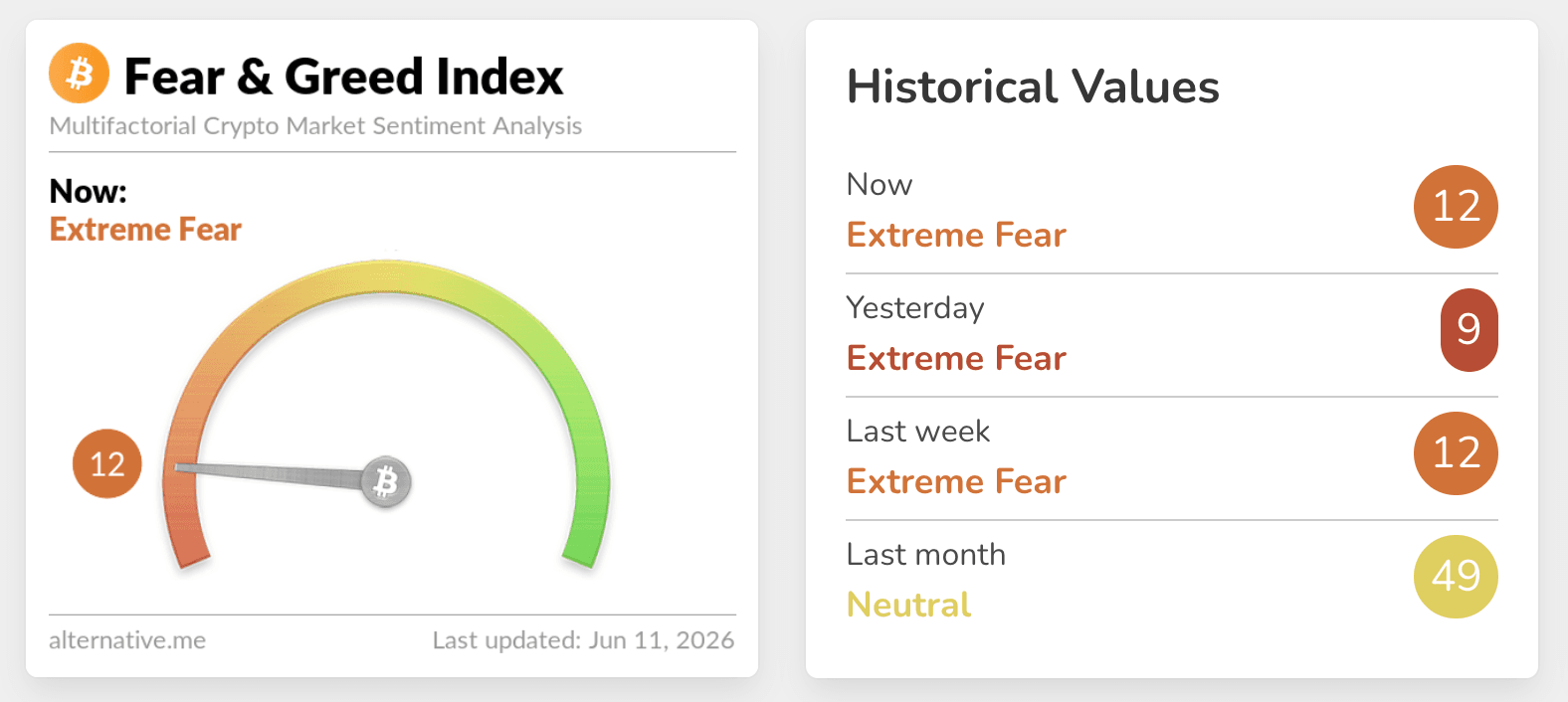
Source: Alternative
Key News Highlights:
CFTC Proposes Prediction Market Framework to Clarify the Boundary Between Gaming and Price Discovery
The U.S. Commodity Futures Trading Commission (CFTC) recently released a proposed rule aimed at creating a clearer regulatory framework for the rapidly growing prediction market sector. The move signals that regulators are shifting from passive oversight to a more active effort to define the treatment of sports event contracts. The proposal seeks to balance gaming-related concerns with financial innovation. It explains the regulatory logic in detail and states that prediction contracts based on final scores, win-loss records, or season statistics may technically fall within the federal definition of “gaming.” However, these markets can also aggregate information and support price discovery, so they may not be contrary to the public interest under certain conditions. By contrast, contracts linked to specific athlete injuries, referee decisions, or other outcomes that could be easily manipulated face a much stricter regulatory view. The CFTC made clear that these contracts would be unlikely to pass the public interest test. The proposal also clarifies that election-related prediction contracts are not considered gaming under federal law. This clarification may provide a stronger compliance path for platforms such as Kalshi and Polymarket, which gained significant traction during the 2024 U.S. presidential election cycle. The draft rule has now entered a 45-day public comment period. Legal experts generally believe that the proposal does not create a blanket approval process. Instead, it moves toward a more flexible principles-based framework. Each listed contract will still face individual review to ensure market integrity, fair participation, and proper limits on manipulation risk. This could play an important role in shaping the long-term regulatory landscape for U.S. prediction markets.

Bitcoin Miner Profitability Falls to Record Lows as Hashrate Economics Face Structural Pressure
The Bitcoin mining industry is facing an unprecedented profitability squeeze. Network competition has intensified, while mining margins have dropped to record lows. This has placed miners under growing pressure from operating costs and debt burdens. It has also raised market concerns that miners may sell part of their Bitcoin holdings. Recent market data shows that estimated daily revenue per unit of hashrate has fallen to $0.028. This is a sharp decline from $0.039 just one month ago. The compression in operating margins has forced some high-cost miners to consider selling Bitcoin from their balance sheets in order to maintain normal cash flow. Although the market is closely watching whether miners could trigger broader selling pressure, several analysts note that the rise of spot Bitcoin ETFs has changed the market structure. Daily institutional flows now far exceed total miner output. As a result, broader macroeconomic data and global capital flows are becoming more important for Bitcoin pricing than miner profitability alone. At the same time, weak mining returns are pushing miners to explore new business models. The rapid growth of AI infrastructure has created strong demand for power resources. This has opened a potential transition path for mining companies. Many firms are reallocating electricity facilities and server racks that were originally used for crypto mining toward higher-margin AI computing. This shift may offer more stable long-term cash flow. It also means that Bitcoin’s hashrate structure could undergo a deeper reshuffling. For mining companies seeking operational sustainability, this has become one of the most attractive strategic options. Even if some high-cost miners temporarily shut down, the industry may become more industrialized and capital-driven after this consolidation cycle.
UK Crypto Advocacy Group Launches Campaign Against Bank Transfer Restrictions
Stand With Crypto UK has launched a major campaign against local banks over restrictions on transfers to cryptocurrency exchanges. The campaign aims to address a long-standing issue in which users are often blocked or rejected by banks when attempting to move personal funds to regulated crypto platforms. According to a recent report from the UK Cryptoassets Business Council, as many as 40% of crypto-related transactions are currently blocked or restricted by UK banks. The report also notes that many banks apply broad restrictions across the entire crypto sector. These measures often fail to consider the legality of individual customer funds or the compliance status of specific exchanges. Stand With Crypto UK currently has around 286,000 members. The group is encouraging members to use a new automated tool on its website to submit formal complaint letters to their banks. These letters call on banks to stop what the group describes as unreasonable discrimination against platforms registered with the Financial Conduct Authority (FCA). They also ask banks to protect users’ legitimate right to participate in digital financial markets. Several senior financial industry figures and clearing bank executives have stated that banks should return to a risk-based approach. They argue that broad restrictions may be simple to apply, but they harm market competition and make it harder for regulated businesses to operate normally in the UK. The campaign comes at a critical time for UK policy development. Lawmakers and regulators are working on a broader framework for stablecoins and digital assets. Through this type of public advocacy, the industry hopes to push UK banks to reassess their risk appetite toward crypto and support a more innovation-friendly environment for digital assets.

Bank of Japan Policy Meeting Approaches as Markets Watch Its Potential Impact on Bitcoin
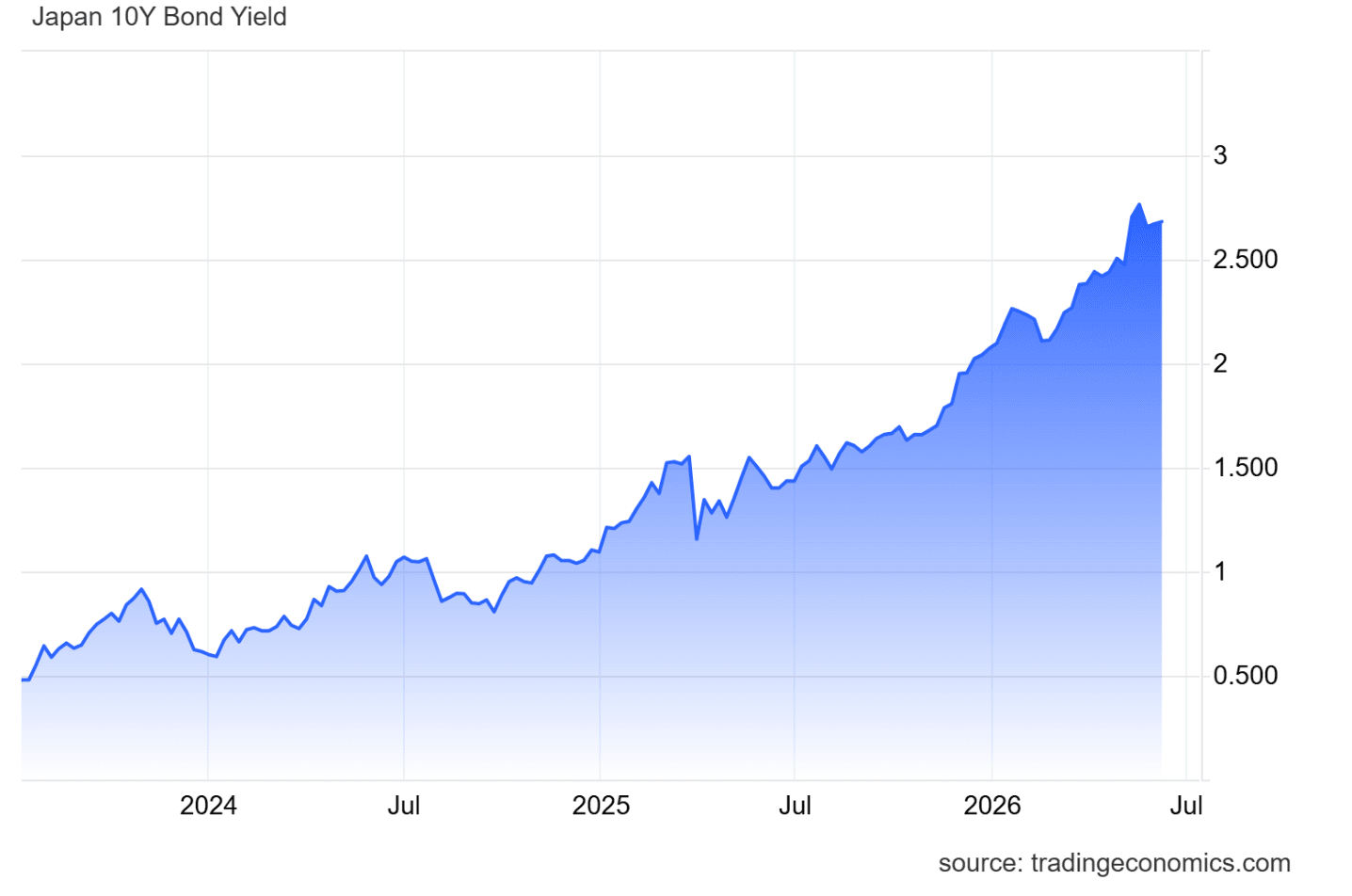
The Bank of Japan (BOJ) will hold its next monetary policy meeting on June 16. Market discussions have once again focused on how potential rate changes could affect global risk assets, especially Bitcoin. Historical data since 2024 shows that Bitcoin has often experienced sharp short-term corrections after BOJ rate hikes. Across several past decisions, Bitcoin’s average drawdown was around 22.5%. This close relationship has made investors highly sensitive ahead of each BOJ meeting. However, deeper market analysis suggests that the current macro environment is structurally different from previous periods. After several policy adjustments in 2024, Japan has gradually moved away from its long-standing negative-rate regime. Domestic borrowing costs have already risen to a more normalized range. Because of this, the marginal impact of any further rate hike may be much smaller than the initial policy shift from ultra-loose conditions to tightening. Some crypto researchers also argue that the widely discussed yen carry trade has lost much of its influence over global capital flows since 2024. They believe its potential negative impact on Bitcoin should not be overstated. Even so, current on-chain data still reflects market caution. As Bitcoin’s price has experienced sharp volatility, large whale accounts holding between 100 and 10,000 BTC have recently shown a continued trend of sending funds to exchanges. This suggests that major holders are actively reducing risk exposure or preparing for higher volatility around the policy meeting. This tactical profit-taking or hedging activity may be a more direct and tangible source of near-term selling pressure for Bitcoin than the BOJ decision itself.
Disclaimer: The information provided in this section is for informational purposes only and doesn't represent any investment advice or FameEX's official view.