FameEX Today’s Crypto News Recap | August 19, 2026
2026-08-19 07:02:07
Crypto PAC spending rises in U.S. elections as TikTok explores P2P payments and South Korea blocks Polymarket; today’s BTC trades near $65K in Fear sentiment. The current crypto market is showing two distinct structural trends: volatility continues to compress while retail demand is rising rapidly. Bitcoin is trading around the $65K price range, while Ethereum remains near $1,900. The Crypto Fear and Greed Index has risen to 46 from 27 last week, indicating a notable improvement in overall market sentiment. Recent market data shows that Bitcoin spot demand is close to turning positive for the first time since February. This suggests that spot buying activity is beginning to strengthen. At the same time, retail demand for Bitcoin has climbed close to a two-year high. Retail participants have become more sensitive to short-term price moves, while momentum-chasing activity has also increased. On the fund flow side, U.S. spot Bitcoin ETFs recorded USD 189 million in total net inflows yesterday. A leading institutional product accounted for USD 144 million of the daily inflows, while cumulative net inflows across spot Bitcoin ETFs have reached USD 52.28 billion. However, market activity remains constrained by the low-volatility environment. Bitcoin’s annualized 30-day realized volatility has fallen to around 42%, while open interest also remains relatively low. For Ethereum, leveraged positions are concentrated around several key liquidation levels. A drop below $1,821 could expose around USD 735 million in cumulative long liquidation intensity across major trading platforms. In contrast, a move above $1,997 could expose around USD 604 million in cumulative short liquidation intensity. Recent research from traditional financial institutions also suggests that a modest Bitcoin allocation within a conventional stock-and-bond portfolio could improve risk-adjusted performance under hypothetical scenarios. This reflects growing institutional interest in Bitcoin as a portfolio diversification tool. Meanwhile, weaker U.S. equities, rising long-term Treasury yields, and changing expectations for the future path of monetary policy are influencing short-term capital allocation. Some trading activity is shifting toward artificial intelligence, tokenized assets, and prediction markets. Bitcoin remains in a period of price compression. The upside is partly constrained by corporate treasury flows, while post-deleveraging market structure and accumulation by long-term holders continue to provide support on the downside. Overall, the market is seeing improving sentiment and stronger spot demand, but price volatility and trading activity remain subdued. Institutional fund flows, retail participation, liquidation positioning, and changes in macro interest rate expectations remain key areas to watch for the next phase of market structure.
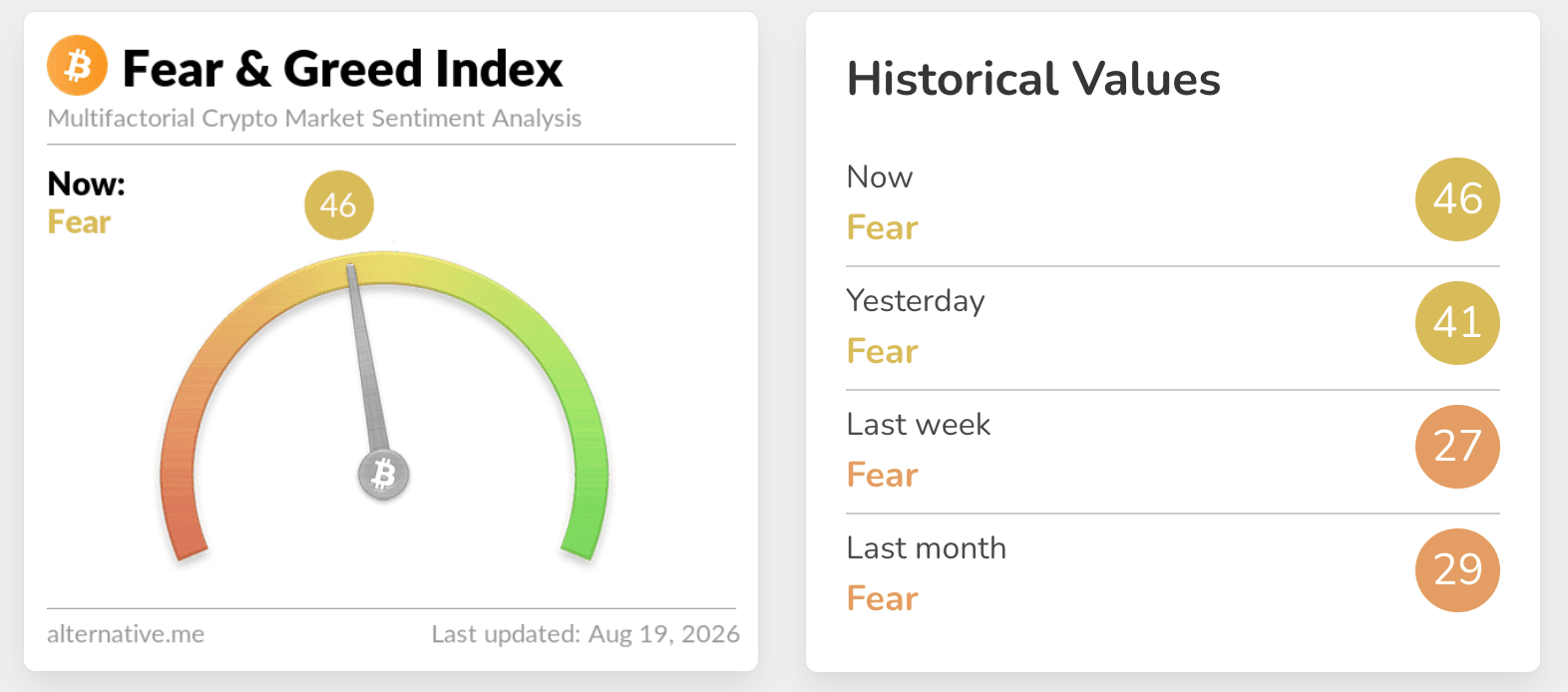
Source: Alternative
Key News Highlights:
Bitcoin Returns to $65K as U.S. Stocks Rebound and Strait of Hormuz Developments Draw Attention
Bitcoin briefly climbed to $65K after U.S. markets opened on Tuesday. This marked its first return to that level since August 10. U.S. equities also rebounded from recent lows during the same trading session. The S&P 500 had previously fallen to around 7,696, its lowest level since August 4, before recovering later in the day. Markets also remained focused on the latest developments surrounding the Strait of Hormuz amid ongoing tensions between the United States and Iran. U.S. President Donald Trump said the strait was open and operating. He also said there were no current or scheduled talks between the United States and Iran, while the naval blockade remained in place. Oil markets showed limited volatility following the comments. WTI crude was down about 1% at the time of the report and traded near $84 per barrel. In contrast, pressure remained elevated in the U.S. long-term Treasury market. The 30-year Treasury yield climbed to 5.34%. Investors continued to monitor government borrowing needs and the pricing of inflation risk, making cross-asset volatility an important part of the day’s trading backdrop. Bitcoin failed to extend its gains after briefly returning to $65K and later moved back into its recent trading range. The price action placed Bitcoin, U.S. equities, Treasuries, and oil back in focus as geopolitical developments continued to shape global risk markets.
Crypto-Backed PAC Spends More Than USD 2 Million on Ads in Florida Primary
Federal Election Commission records show that Protect Progress, a political action committee affiliated with Fairshake, has spent more than USD 2 million on media opposing Democratic candidate Oliver Gilbert in Florida’s 24th congressional district. Fairshake is primarily funded by Ripple Labs and a major CEX. Its affiliated groups have continued to spend on election advertising across several states during the 2026 U.S. midterm election cycle. Reports noted that Gilbert had not taken a prominent public position on digital asset policy before the ads were released. Frederica Wilson currently represents the district and is not seeking reelection. She previously voted against both the GENIUS Act and the CLARITY Act in Congress and has publicly endorsed Gilbert. Another Democratic candidate, Shevrin Jones, completed a policy questionnaire from crypto advocacy group Stand With Crypto and received a rating indicating support for digital asset policy. Gilbert criticized the advertising campaign. A Fairshake spokesperson said the underlying facts cited in the ads were accurate but did not provide further details about the reason for the spending. Fairshake reported around USD 193 million in available political funds as of January. By June, its affiliated groups had already spent more than USD 82 million on primaries and special elections. Protect Progress has also funded advertising in support of selected Democratic candidates in other Florida races. Another affiliated organization has backed Republican candidates in Alaska, Florida, and Wyoming. With Congress expected to reconvene in September, digital asset legislation such as the CLARITY Act will remain closely watched alongside crypto industry participation in the 2026 election cycle.
TikTok Reportedly Developing P2P Transfers Through Direct Messages
According to Bloomberg, TikTok is developing a peer-to-peer payment feature that could allow users to send money directly through private messages. Evidence of the feature was found in the code of the U.S. version of the TikTok app. The code already contains a relatively complete payment interaction flow. Recipients may be able to accept payments with a single tap, while senders could attach a text message to the transfer. Changes in transaction status could also be delivered through push notifications. The overall experience would resemble existing social P2P payment services. TikTok said the feature has not entered testing in any market and has not confirmed whether it will ultimately be launched. The company already has payment experience in parts of Southeast Asia. TikTok Pay is used mainly for purchases through TikTok Shop in markets such as Vietnam, Malaysia, and Thailand. TikTok has also been recruiting for financial services roles in the United States and other markets, drawing further attention to its broader payments strategy. The platform has more than 1 billion monthly active users globally and around 170 million users in the United States. The discovery of the payment feature therefore attracted significant attention across the payments industry. Shares of several payment companies, including PayPal, showed notable moves after the report. Whether TikTok will formally enter the U.S. The P2P payments market will depend on future product testing, commercial plans, and regulatory requirements.
South Korea Moves to Block Polymarket Over Illegal Gambling Concerns
South Korean regulators have ordered access to Polymarket to be blocked in the country after determining that the prediction market service involves gambling activities prohibited under local law. The country’s media and communications review authority said that some of the information and services provided by Polymarket fall within legal definitions related to facilitating gambling or operating a gambling venue under the Criminal Act. The regulator also cited the National Sports Promotion Act, saying that certain prediction market activities may constitute prohibited forms of similar betting. Polymarket allows users to trade on the outcomes of political, sports, weather, and other real-world events. Users can gain or lose money depending on the final outcome of those events. South Korean regulators said this outcome-based profit-and-loss structure encourages highly speculative behavior and formed an important part of their assessment. In its submission to the regulator, Polymarket said it had removed Korean-language services and did not support payments in Korean won. It also said transactions are conducted through noncustodial systems and smart contracts. The platform argued that it does not directly manage user funds and instead facilitates transactions through its technical infrastructure. South Korean regulators rejected those arguments. They said technical characteristics such as decentralization, order books, and trading interfaces do not exempt a service from local law. Following the decision, internet service providers in South Korea will be required to restrict local access to Polymarket.
Disclaimer: The information provided in this section is for informational purposes only and doesn't represent any investment advice or FameEX's official view.